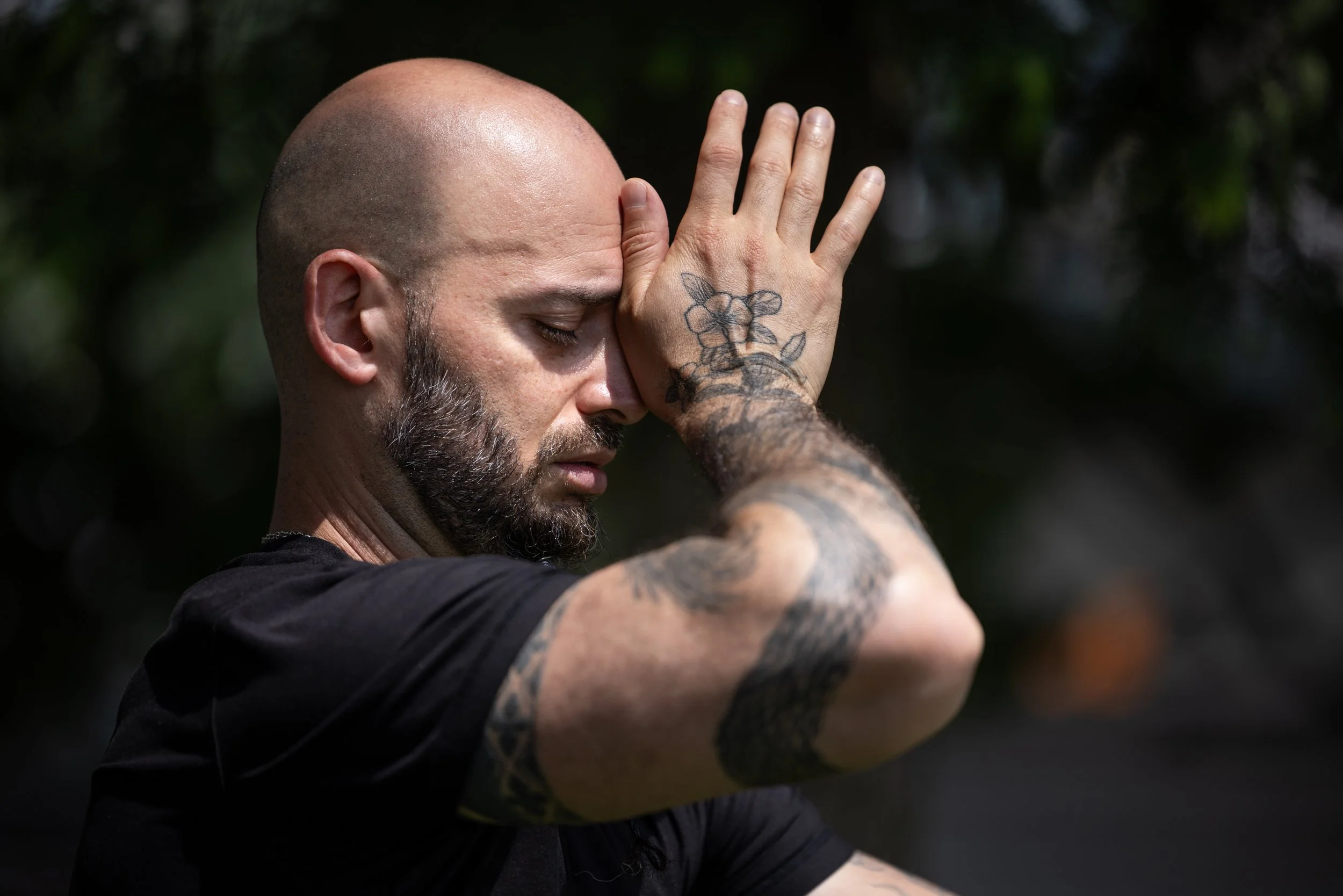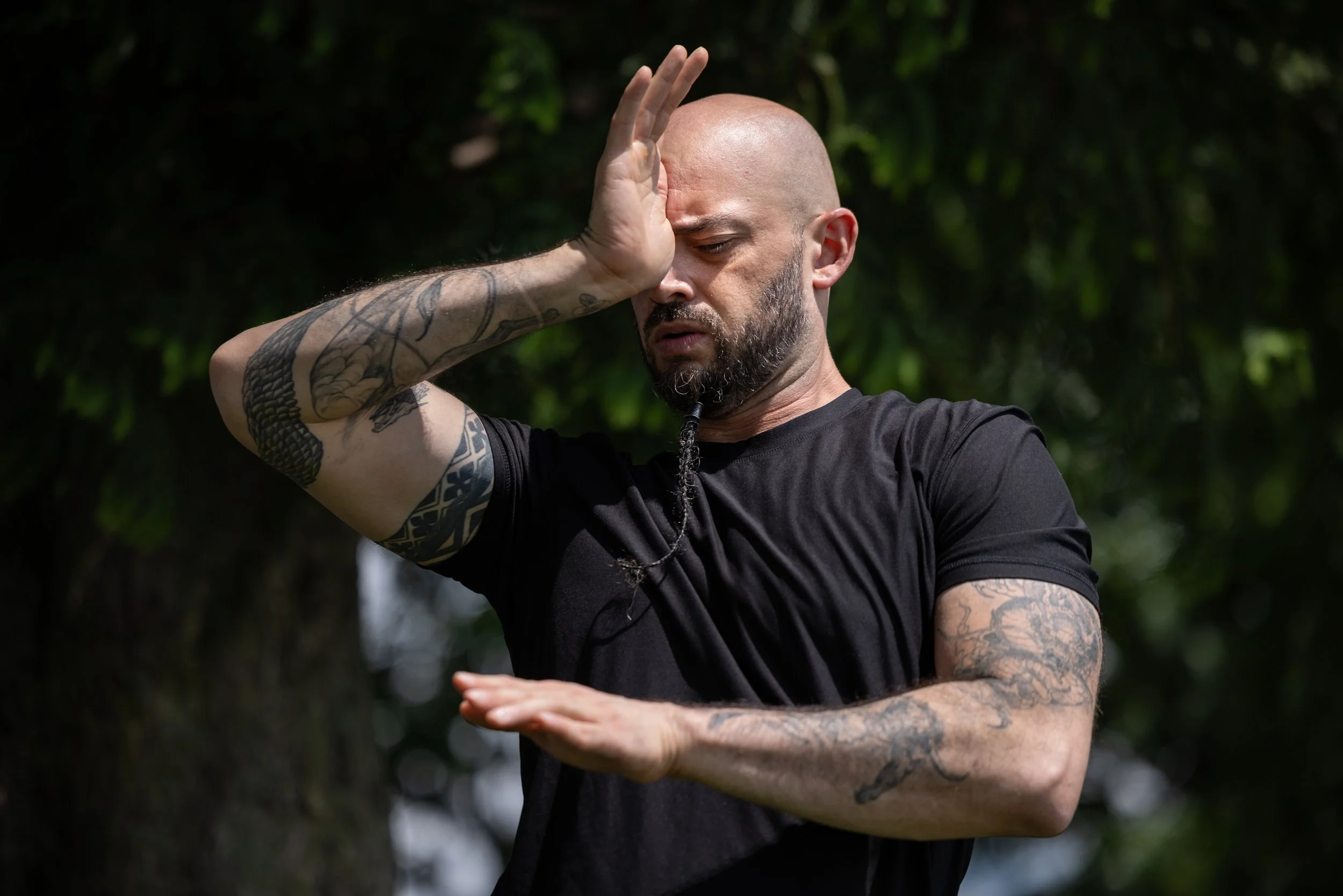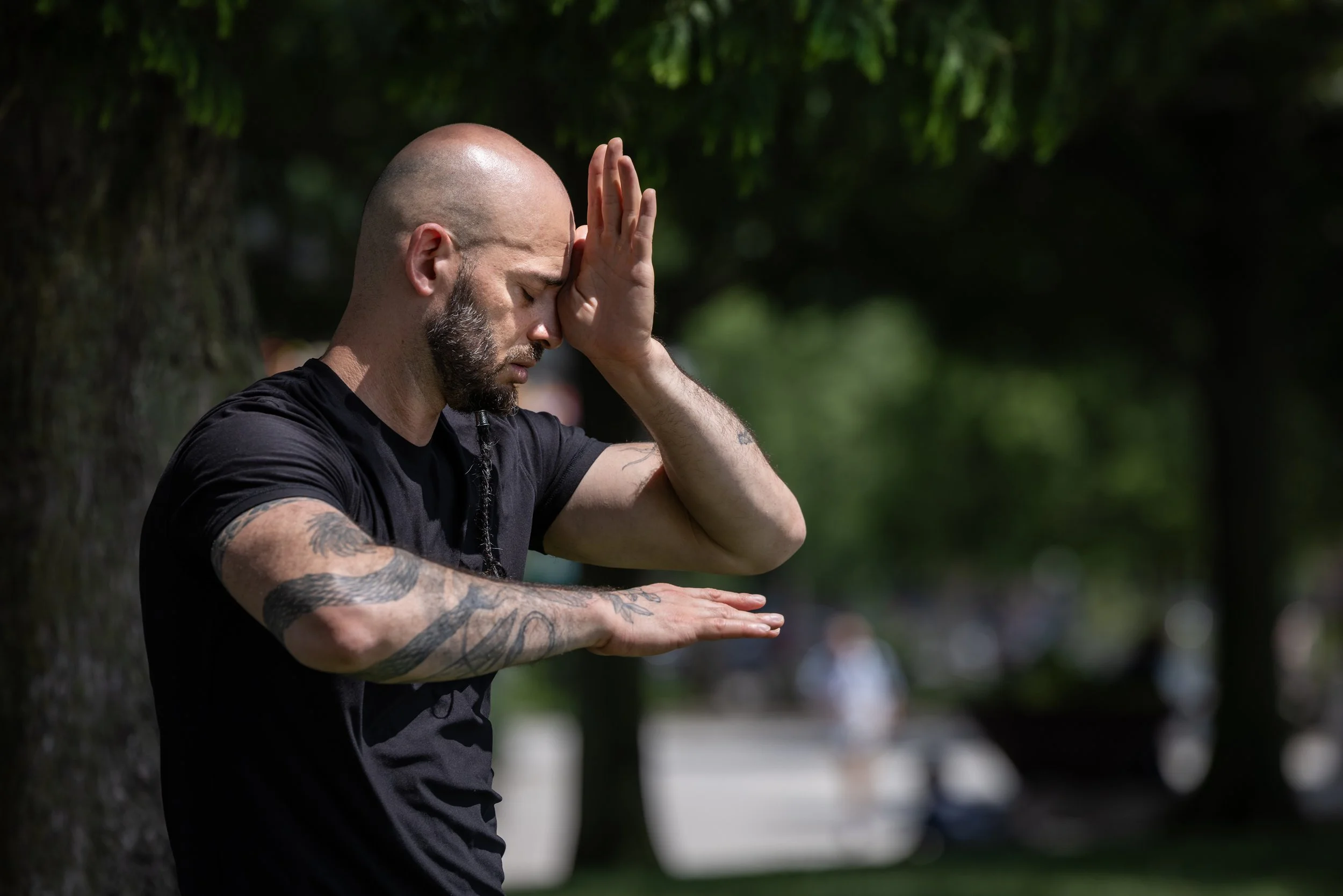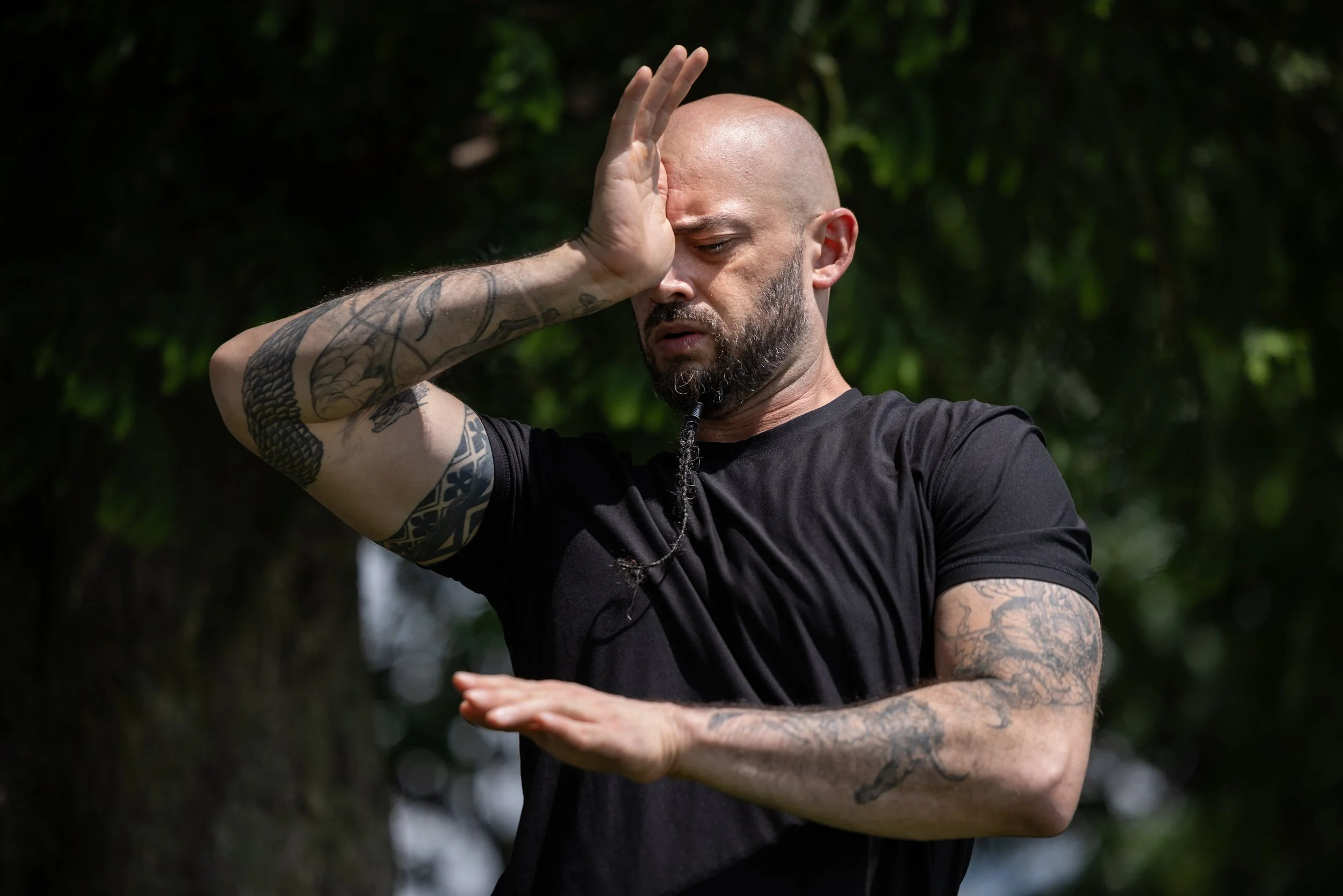
Vortex: A Sacred Dance Practice
Vortex emerged from the need for inclusive teaching materials for visually impaired dancers like myself. This methodology reimagines visual-motor-spatial concepts as sensory-motor-spatial experiences, guiding dancers through alignment, positioning, orientation, and improvised movement using proprioceptive breathing and bioelectricity. These techniques are intrinsically linked to the nervous system, which governs the electrical signals that regulate bodily functions—including the voluntary movements central to dance.
Movement in Vortex arises from five key body points: 1)the third eye/lambda, 2)sternum/thoracic vertebrae, 3)pubic symphysis/sacrum, 4)volar/dorsal wrist, and 5)calcaneus/talus. These points align with the body’s Anteroposterior, Laterolateral, and Longitudinal axes, and traverse the Sagittal, Transverse, and Frontal planes, creating angular and curved motion.
At its core, Vortex is sensorial dancing—an embodied practice where movement is felt, interpreted, and expressed beyond visual constraints.
Vortex Technique: From Training to Choreographic Innovation
For two decades, I developed and taught Vortex as a training technique, rooted in sensory-motor principles and embodied exploration. In 2022, I expanded its scope, transforming Vortex’s vocabulary and principles into a primary creative framework for The Circle or Prophetic Dream (Danspace Project, 2022), an improvised and spontaneous dance. This experiment became a pivotal exploration of movement as a living, evolving language.
Building on this, my next performance The Square: Displacement with no End (Abrons Arts Center, 2023) emerged as a study in repetition and structured spontaneity, where pre-planned sequences were fully mapped yet devoid of fixed order or time. This shift marked a turning point: Vortex evolved from a training method into a choreographic device, ultimately becoming a comprehensive dance system—a methodology in its own right.
Today, my research continues to unfold through structural movement analysis, fixed sequences, and ethnochoreology, deepening the connection between Vortex’s principles and the cultural, anatomical, and improvisational dimensions of dance.