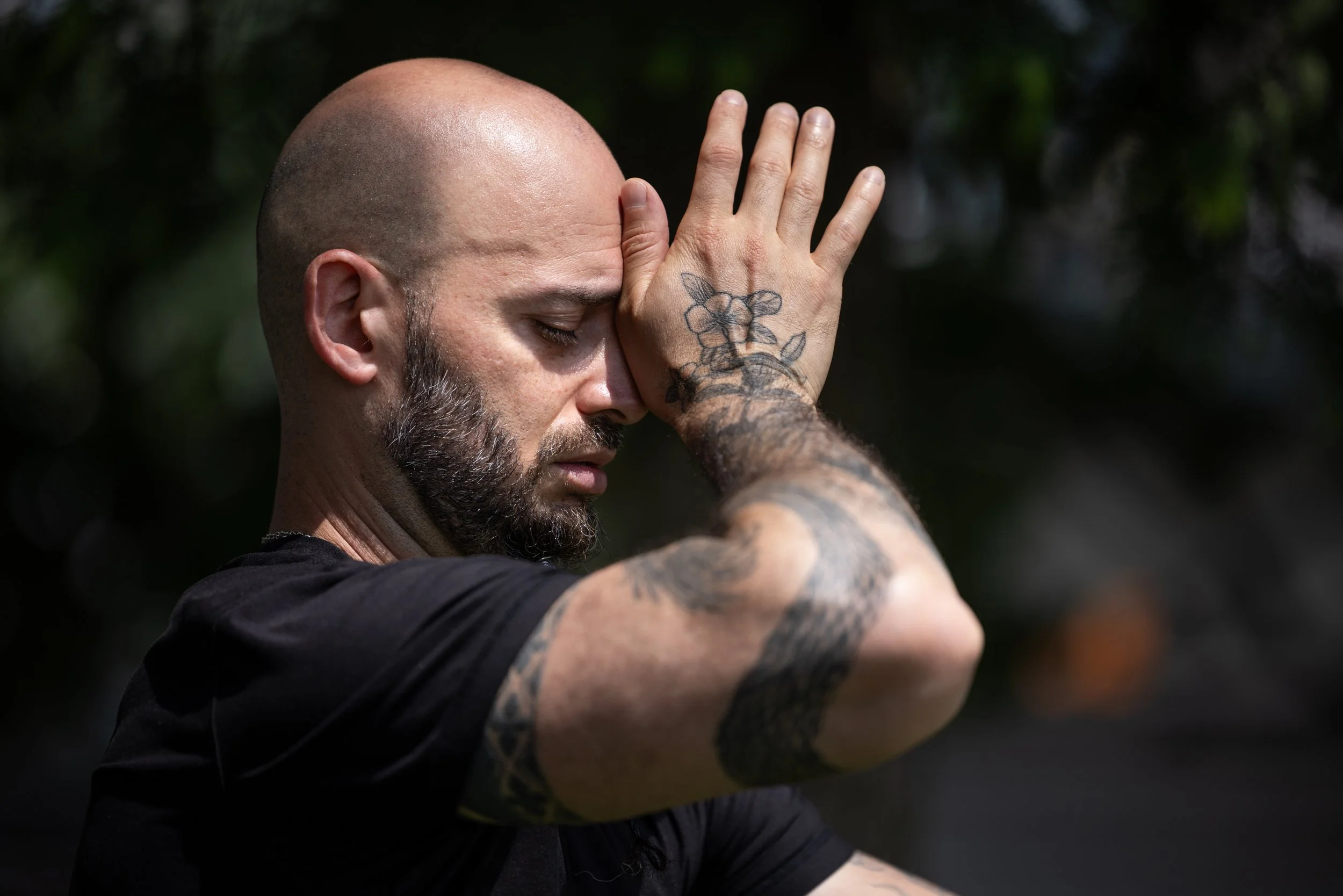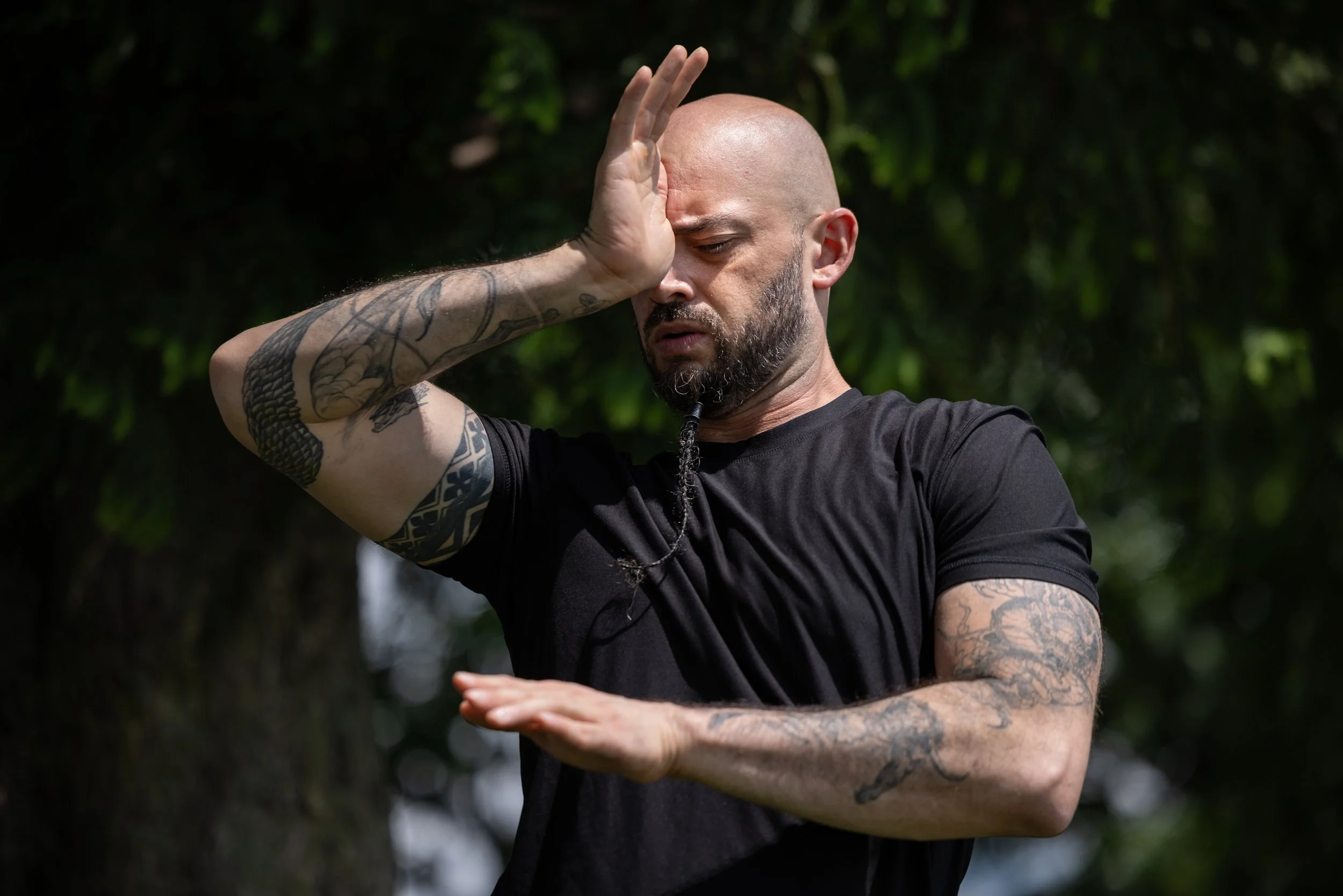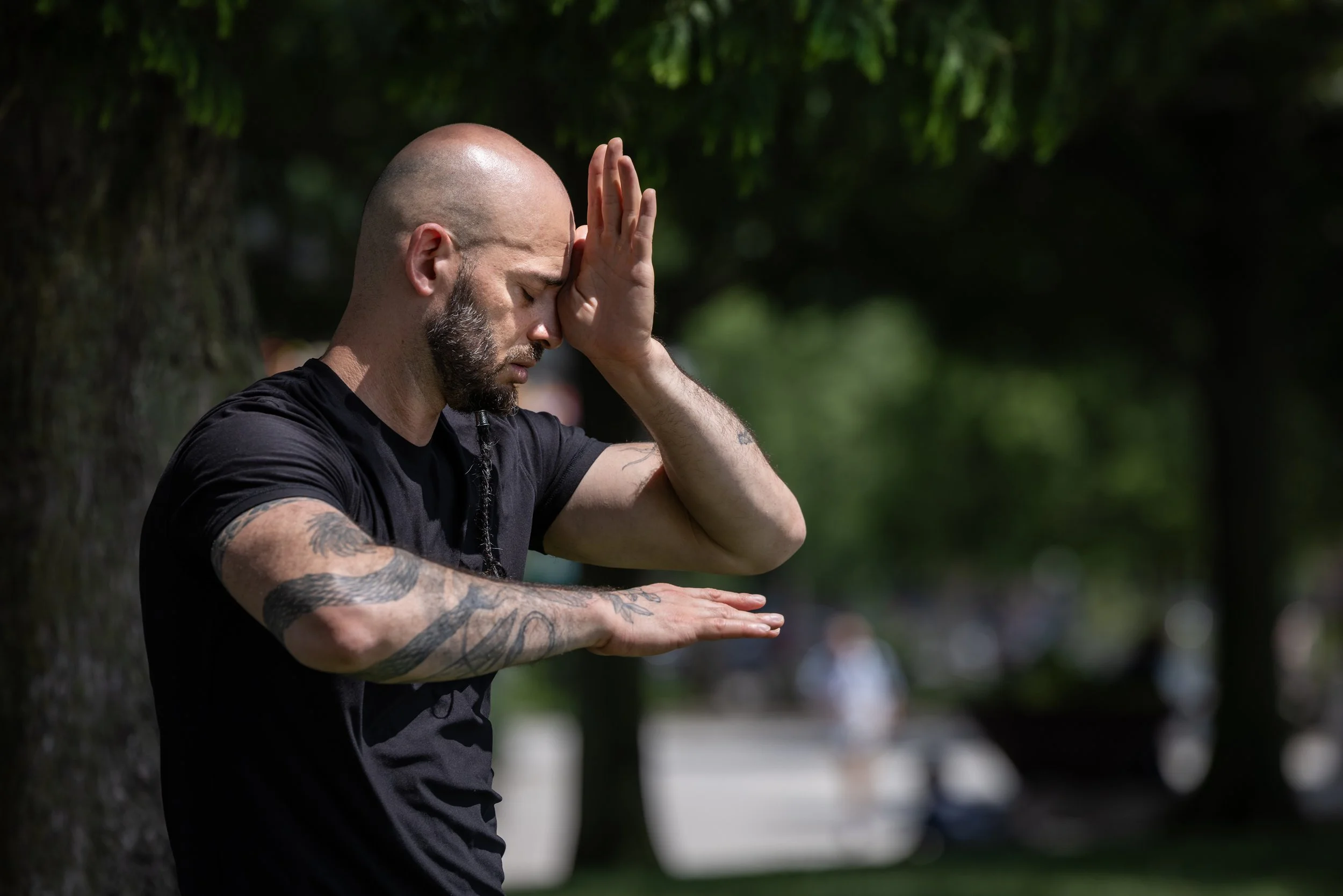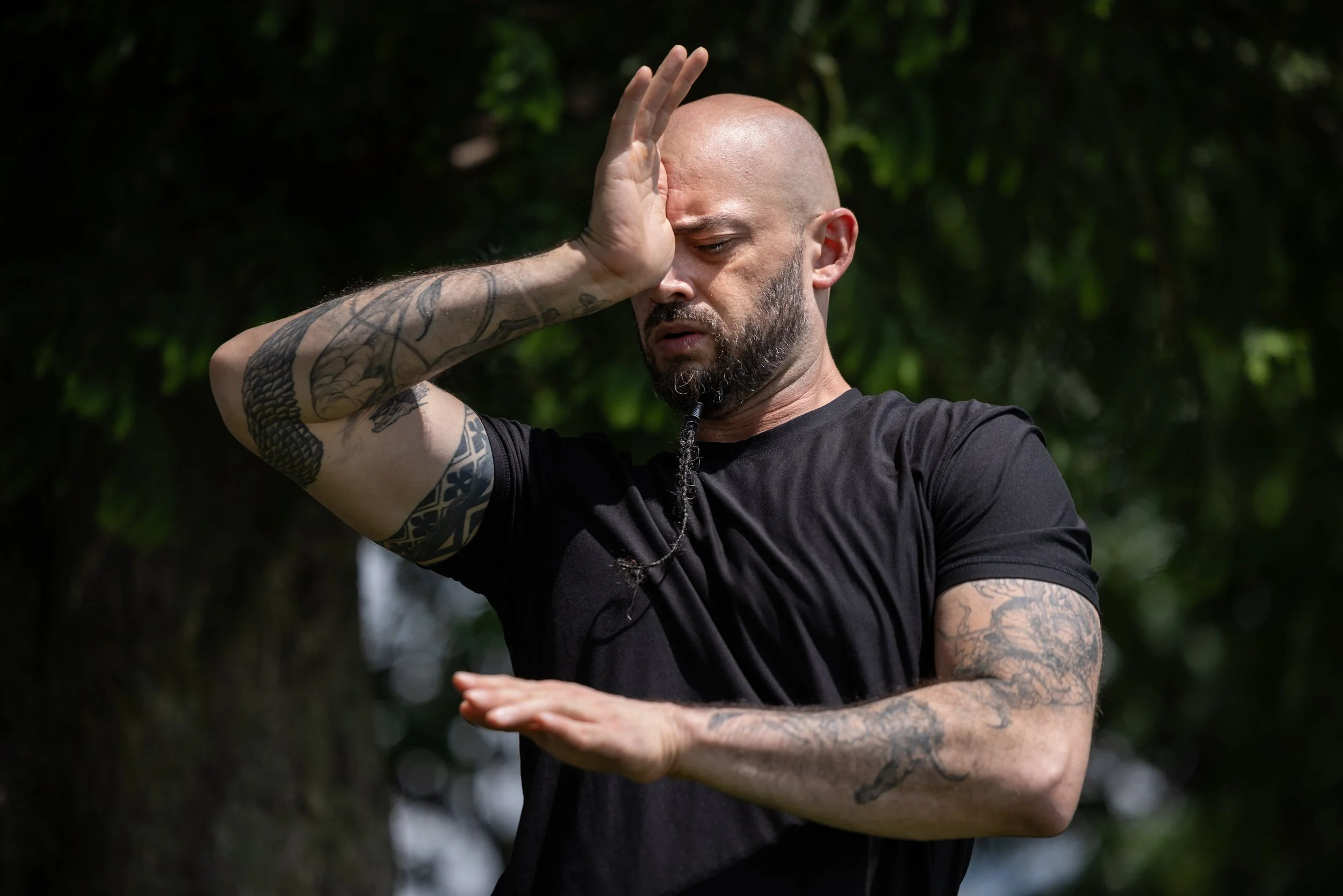
Vortex: A Sacred Dance Practice
Born in response to the lack of inclusive teaching materials for visually impaired dancers like myself, Vortex transforms visual-motor-spatial concepts into sensory-motor-spatial experiences. Dancers learn about alignment, positioning, orientation, and improvised movement through proprioceptive breathing and bioelectricity, linked through the nervous system, which controls the electrical signals that regulate bodily functions, such as the voluntary movement inherent in dance. Angular and curved movement emerges from five (ventral/dorsal) points in the body: the third eye/lambda, sternum/thoracic vertebrae, pubic symphysis/sacrum, volar/dorsal wrist, and calcaneus/talus, along the Anteroposterior, Laterolateral, and Longitudinal body axes, and across the Sagittal, Transverse, and Frontal planes.
In essence, Vortex is sensorial dancing.
For 20 years I have developed and taught Vortex as a training technique, until 2022 when I decided to delve into its specific vocabulary and principles not just for training, but as a primary creative framework for designing a new improvised, spontaneous dance: “The Circle or Prophetic Dream.” The choreographic experiment was a resounding experience. In my next choreography, "The Square: Displacement with no End", dedicated to repetition of specific movements, a new door was opened: creating pre-planned movement sequences, fully mapped out, without any established order or time.
The transition from a set of learned skills to generating unique artistic expression made me consider Vortex as a choreographic device. With this evolution, my work became a comprehensive dance system—in other words, a methodology.
The subsequent stage of my research involves structural movement analysis, fixed sequences, and Vortex's ethnochoreology.